Horror News
The Best Underground Horror

The Honeycut: Vastarien of Alioth Borealis Talks Black Metal, Cosmic Horror, and More
Interview originally published June 2025
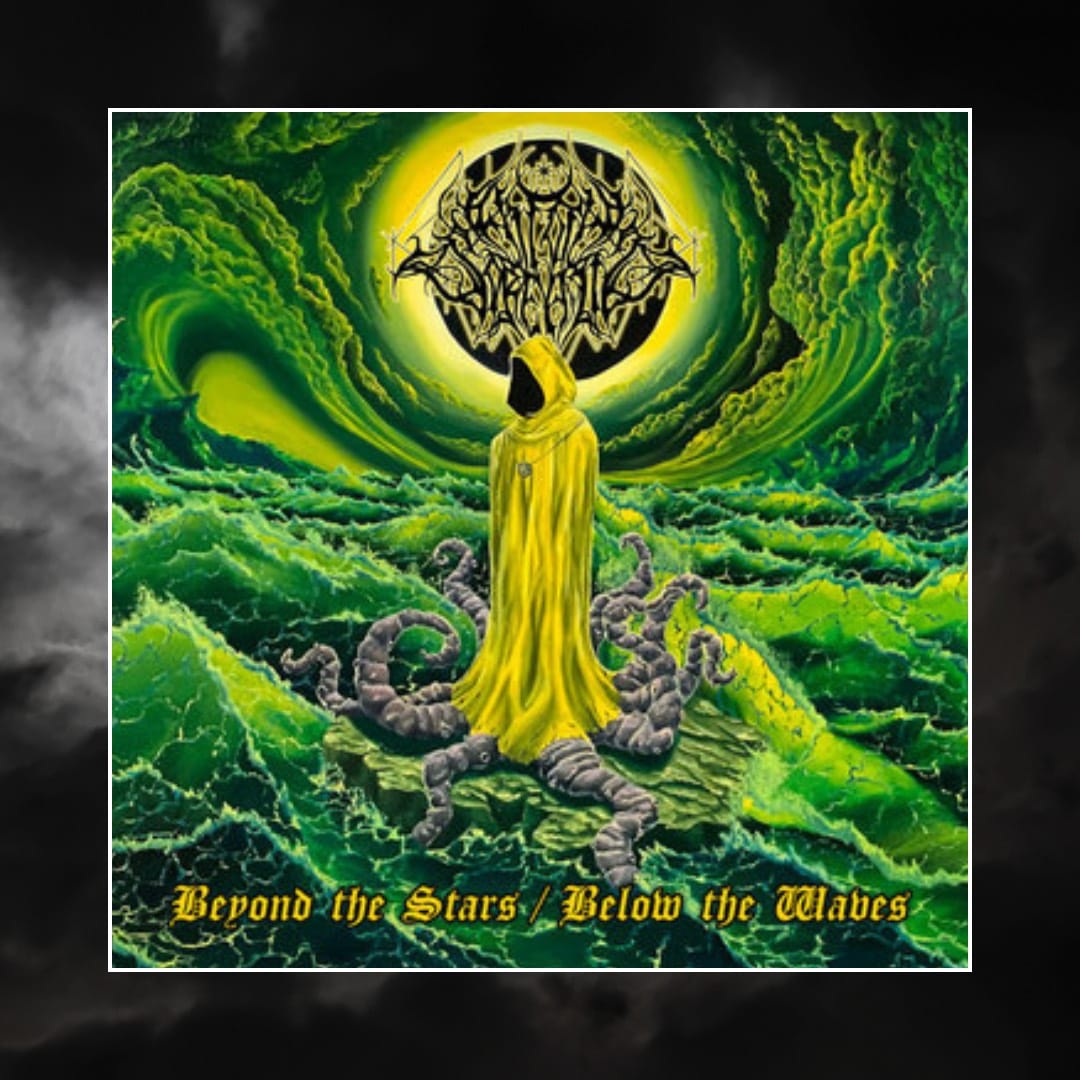
I first heard of Alioth Borealis when the driving force behind the band, Vastarien, commented on the interview I did with Spatterpvnk of Saidan. I checked out his first LP, “Beyond the Stars/Below the Waves,” and was immediately hooked. He brings a very atmospheric, synth-heavy sound to the black metal genre that is sure to echo in the cosmos.
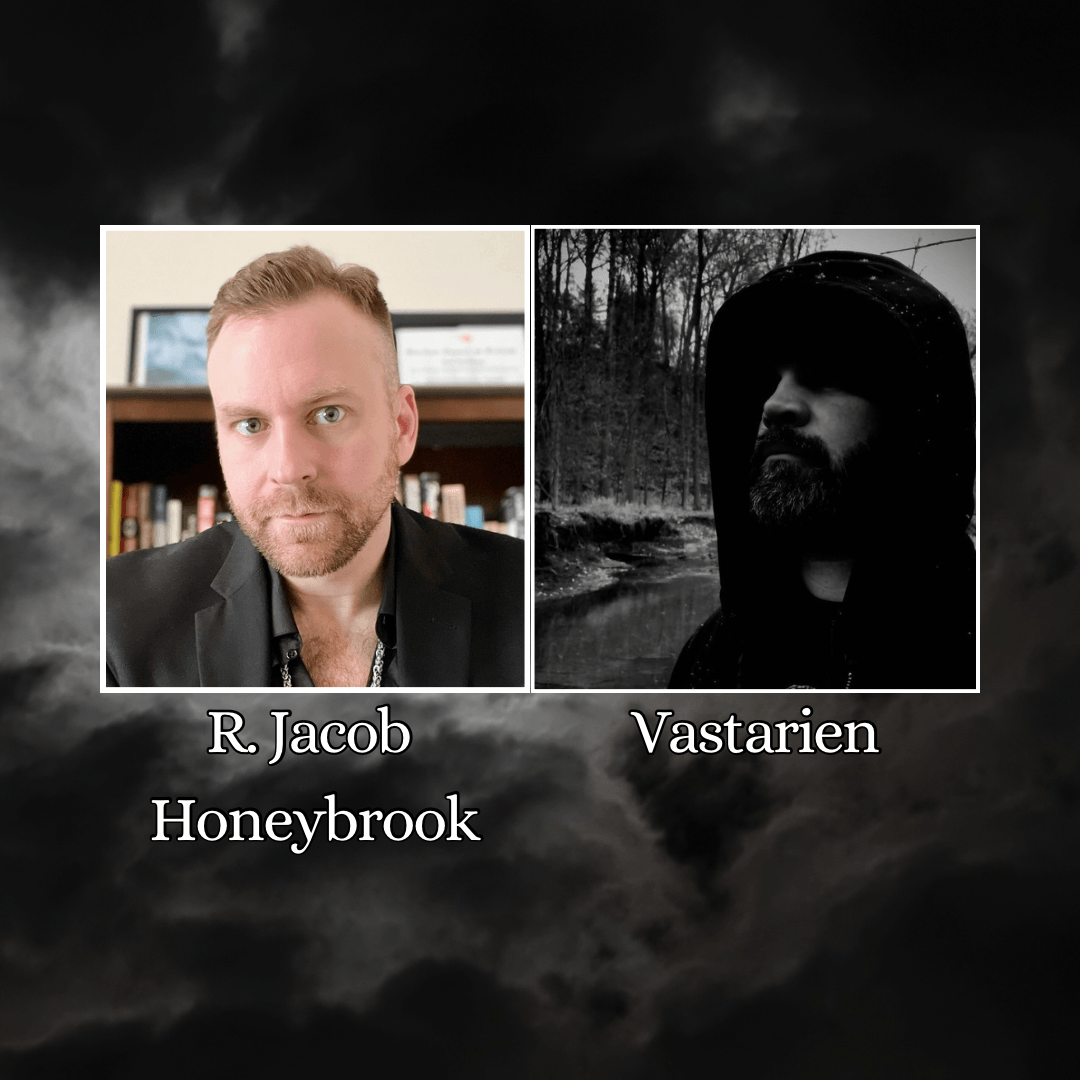
R. Jacob Honeybrook: How would you describe Alioth Borealis (AB) to someone unfamiliar with your band?
Vastarien: Thanks for having me, Jacob. The sound of Alioth Borealis has evolved into what I would describe as atmospheric ambient black metal. The riffs are my strange take on second wave sounds, but rarely do I finish a track without adding a heavy dose of synth, piano, or odd percussion. I like to mix recording techniques - with some parts, such as vocals, recorded in an extremely lo-fi manner, and other sections captured much more clearly. Thematically, the inspiration comes from mostly weird fiction authors (such as HP Lovecraft and Thomas Ligotti) and I call the music “cosmic horror black metal.” The music is meant for contemplation of cults that worship ancient entities, alien beings barely recognizable as life forms, questions and doubts about the nature and reality of time and space, and the madness that would surely result from knowing the true answers to our most profound existential and metaphysical questions.
RJH: In the past few years, you’ve put out several demos, singles, and EPs. “Beyond the Stars/Below the Waves” was your first full-length album. What is something you’re most proud of on this release?
Vastarien: Most of the recordings before the full-length were solo basement demos that were created rather quickly. I spent more time making the newer songs more complex and layered and tried new vocal styles. I wanted to expand the sound further, but I know my limitations. I don’t play drums or know much about mixing and mastering. I felt that live drums would bring much more intensity to the songs. I brought in collaborators for the first time and they took the sound to a higher level. Jesse Greenfeather of Burial Oath (who has also played live with Uada and Cloak) played drums and mixed the album. I invited Veska to write lyrics and vocals for a song. I feel satisfaction in that I drove the process to create songs that I still like listening to. It was also sick to collaborate with Jems label for the physical release and Smara Kand for the music video.
RJH: You created AB during the pandemic. It seems like a lot of people decided to go after something more during the lockdowns. Aside from having extra time at home, was there something more that made you decide to pull the trigger and begin this band back then?
Vastarien: Yes, the band was “born of plague.” I spent a lot of time in the woods, which was peaceful, but the dark atmosphere of the time was pervasive. I had always played music written by others, but I realized as I spent this time alone that I had eerie melodies floating in my head that were my own. I captured them on the keyboard and started developing songs. I also had a lot of time to read, delving more deeply into the darkest stuff I could find. Hence the obscure dread of the themes.
RJH: Can you tell us where you came up with the AB name? What about Vastarien?
Vastarien: “When the star of Alioth leers through the Aurora Borealis, evil is afoot.” I heard these words in my mind as I gazed at the Great Bear constellation one night. I felt that it was an old folk tale’s warning I once heard. Or maybe the words were remembered as something whispered to me in a dream. I’ll never be sure.
Vastarien is the name of a short story by Thomas Ligotti about a strange city, arcane books, and disorienting dreamscapes “without coordinates or dimension.”
RJH: You play several different instruments and listen to a bunch of different music. You have a lot of options when it comes to making music. What drew you this particular style.
Vastarien: Though I explore any form of music I can find as a listener, I always return to metal. No better place for songs in a minor key. I don’t think the themes of my project make sense in any other setting than some form of black metal. There are strange and dark sub-cellars of this genre where odd forms gestate and emerge. Weird and obscure and deformed ideas can thrive and spread, whether lyrical or musical. And if I want to add a tribal drum beat or a noise sample, no one can stop me. I also love traditional orthodox black metal, but it’s not what I make.
RJH: Is there anything you’ve learned, or a certain area you’ve developed in, since putting out your first demo in 2021 to where you are now?
Vastarien: I wanted to develop a vocal style that sounds strange and unique so that’s been a focus for me. I’ll also be incorporating clean singing into future songs. Capturing improvised parts vocally or instrumentally, then incorporating them into the songs, has been something I’ve developed. I’ve also learned that there is an obscene amount of talent and knowledge in the underground metal scene, and if I need insight into something, all I need to do is ask an artist I respect.
RJH: In the past 5-10 years, we’ve seen a lot of U.S. bands taking black metal and put their own twist on it (Deafheaven, Wolves in the Throne Room, Ghost Bath, Saidan). Before that, this style was largely dominated by European bands. Why do you think now we’re seeing this, almost new wave, take off in the U.S.?
Vastarien: This can be a controversial topic. The orthodox black metal purists find this phenomenon unacceptable and feel the genre should not branch too far in different directions thematically and sonically. I understand this and I’m glad these bands exist and carry this torch. I’m glad they disdain that which is not true. Elitism is a good thing in this regard and these bands create essential hymns. That music must never die.
That said, the experimentalists and genre-benders will always have their way with any form of music. And their results can be just as spectacular in a different way. I think there are strong currents of both traditional black metal and these newer styles in the US. You’re right though, there are extremely unique and interesting bands appearing lately. I think this phenomenon builds on itself when musicians see a band like Saidan exploring new territory and are inspired.
I think there is freedom in this form of music, whether it be freedom from religion, societal norms, or even from the confines of the genre itself. Some of the weirdest and most interesting bands I know of are deformed black metal mutants. Personally, I have trouble controlling myself as an artist, so I have to experiment or I don’t feel fulfilled. As far as the spread of this music, there are also a lot of great labels like Jems helping get the songs out there.
RJH: Not only do you enjoy cosmic horror, like H.P. Lovecraft and Thomas Ligotti, but your music is heavily inspired by this theme. What is the appeal of this subject matter to you?
Vastarien: This subject matter is the closest I might have to religion or a belief system - or a lack of belief. There is the famous Lovecraft quote: “We live on a placid island of ignorance in the midst of black seas of infinity, and it was not meant that we should voyage far."
We will never know the true nature of the universe, nor would we be able to understand it. It is foolish to be sure of anything. It is wise to be terrified. We are a speck that can be erased in an instant, and it won’t matter that we ever existed.
Thomas Ligotti said, in “The Night School” - “My desire to know something that I was sure was real about my existence, something that could help me in my existence before it was my time to die and be put into the earth to rot, or perhaps have my cremated remains drift out of a chimney stack and sully the sky—that would never be fulfilled. I had learned nothing, and I was nothing. Yet instead of disappointment at my failure to fulfill my most intense desire, I felt a tremendous relief. The urge to know the fundament of things was now emptied from me, and I was more than content to be rid of it.”
If one accepts these philosophies, it can still at least be interesting to contemplate what might be - hiding just out of sight on earth, slithering in the ocean, invisible in the air, or among the stars. We can’t know much of anything, but we can sense, explore, and imagine if it pleases us to feel the thrill of fear and the unknown.
RJH: What do you think goes into making a good cosmic horror or weird fiction story?
Vastarien: I think the best stories of this genre never fully explain what is happening. There is dread but the cause cannot be fully defined. They hint at horrific possibilities or what could be behind that door at the end of the attic. We won’t know, and can’t know, but dark tentacles are summoned from formerly unused parts or our minds. The nature of reality should be questioned.
I’m not sure why, but short story collections seem to work best for the genre. The authors have to choose every phrase and word so carefully in a limited number of pages. The best weird authors have a large vocabulary or a thesaurus on hand.
RJH: Have you ever considered branching out and writing your own fiction?
Vastarien: I have a couple of unfinished short stories festering. If I found the time to focus on some writing, I think I would enjoy it.
RJH: Do you have any recommendations for books or movies centered on these themes that readers should check out?
Vastarien: As I mentioned I think the short story collections are best.
Every metalhead should have already read Lovecraft’s collected works. No exceptions or excuses.
The Ligotti essentials are “Songs of a Dead Dreamer/Grimscribe,” “Noctuary,” and “Teatro Grottesco.” His writing is beyond strange and unsettling. He will transport you to scary places and it will be difficult for you ever to fully return. Lovecraft’s heir apparent. There is no one like him.
Except perhaps Brian Evenson. I think I started with “Songs for the Unravelling of the World,” but all his short stories are good. Post apocalyptica, disorienting trips to outer space, and deranged semi-humans.
John Padgett is a Ligotti acolyte who’s “The Secret of Ventriloquism” is making waves. It’s excellent and I’m looking forward to what he does next. Check out Scour’s music video for “Infusorium,” which was inspired by the book.
In terms of the long dead - I love just about anything by Algernon Blackwood, M.R. James, Robert Aikman, and of course Poe and Bierce.
I think a lot of these authors are very difficult to adapt to the movie screen. The visuals and concepts are so fantastical that it’s hard to do them justice. How long have we been waiting for a “Call of Cthulhu” movie to come out?
I like classic horror movies with great practical effects like Alien or any good creature feature. I’ll watch any vampire movie, but I love all the “Nosferatu” films (Werner Herzog’s the most). “Late Night with the Devil” was a recent movie I enjoyed. For something truly weird, check out “Mad God” on Shudder.
RJH: I’m wondering what your goals are for AB. Do you want to take it on tour? Or is this more of just a creative outlet for you?
Vastarien: I would love to, but it hasn’t happened yet. I have a vision for it that could be realized someday. It would take a lot for it to come together as I imagine it though. For now, it will just be the songs.
RJH: You also have a few other musical projects. What can you tell us about those?
Vastarien: Night Feeder is my main side project. I describe it as “vampyric black noise.” It started as a place for my ideas that were too wild or extreme to make sense for Alioth songs, so it’s outsider stuff. The theme is vampirism, but the genre is not easily definable. A vampire can live hundreds or thousands of years, and I thought it would be interesting to consider all the different lives and experiences one could have. The Night Feeder songs can be wildly different from each other, because they represent different eras of the vampire - as a brutal nobleman, a twisted musician, a faithful husband, or a depressive spending a century in a dark corner of a sewer.
Often, I build the songs around a field recording. If I’m walking by the river and the throb of a freighter’s propeller sounds interesting, I record it for Night Feeder. There is raw black metal, harsh noise, drone, electronics, throat singing, and a 100-year-old mandolin makes an appearance. There are three existing releases for those brave or foolish enough to listen. Owlripper did three videos that are a good representation of the project. The new album, “Children of the Night,” should be out soon and has some sick artwork from Rotting Reign. Headphones in the dark only.
I’m working on vocals for a few other projects but more info to come on those.
RJH: If there is one thing that you want people to know about AB, what would that be?
Vastarien: I will have a new EP out sometime this year called “Labyrinthine Astronomies”. Expect some surprises from those songs.
“Beyond the Stars/Below the Waves” is streaming everywhere. Listen alone, staring into the night sky!
Thanks to Jacob for doing this interview and be sure to check out his writing. “Devils in the Night” is sick!
A major thank you to Vastarien for taking the time to answer my questions. Check out Alioth Borealis on Bandcamp and follow them on Instagram.
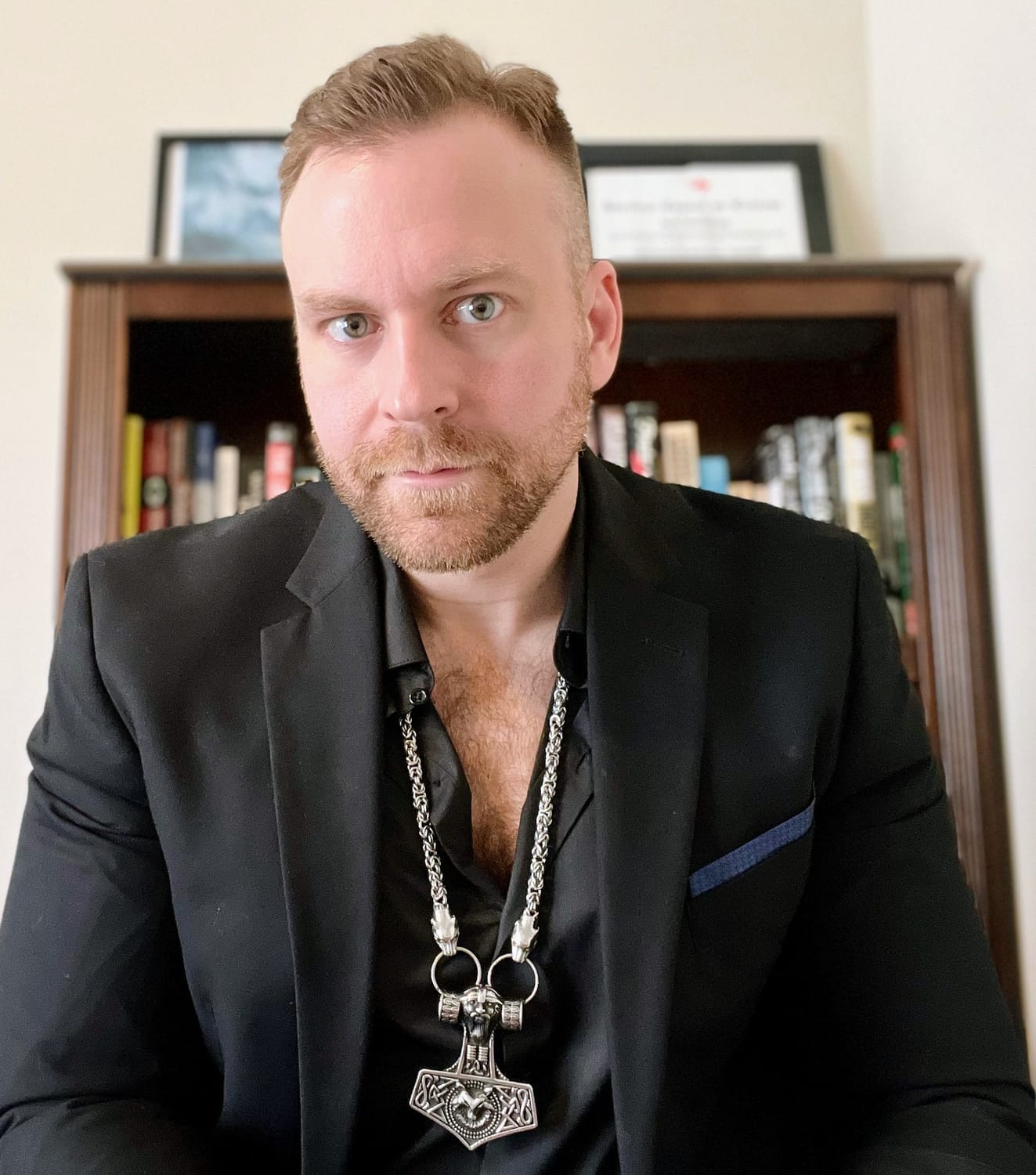
R. Jacob Honeybrook is a fiction author and contributor to TBM Horror. He also co-hosts the Midnight Terrors Podcast alongside Kevin Roche. Check out his books here. Follow him on Instagram!



Follow Us!


